Sublimated vs Screen Printed Jerseys: Which Is Better for Teams
Compare sublimated and screen printed jerseys for teams. Learn durability, cost, design freedom, and which method fits your budget and sport.
A coach calls mid-August asking for 25 basketball jerseys. You've got two weeks before the season starts. He's seen screen printed designs flake off last year, and he's heard sublimation costs more upfront. So which actually survives a season? Which gives him the design he wants without spending double?
The answer isn't one-size-fits-all, but the difference between sublimated and screen printed jerseys is fundamental. It changes what your team looks like, how long it lasts, and what you actually pay per set.
What is sublimation and how does it work?
Sublimation is a heat-transfer process that converts dye directly into the fabric fibers, creating a permanent bond. The design doesn't sit on top of the jersey; it becomes part of it.
Here's the actual process. A design is printed onto special transfer paper using sublimation inks. That paper gets placed against the fabric and run through a high-temperature heat press, usually 350 to 400 degrees Fahrenheit. The heat converts the ink from solid to gas, and it infuses into the polyester fibers. When cooled, the dye is locked in. There's no layer to crack or peel. The color is inside the fiber itself.
This matters because it means no flaking on wash day. Athletes can throw a sublimated jersey through 100 wash cycles and the graphic stays vivid. No fading. No deterioration. The color is literally woven into the material, making it one unified piece rather than a garment plus a separate printed decoration.
Sublimation works best on synthetic fabrics, especially polyester. Cotton and cotton blends require specially treated fabric to accept the dye properly, which limits flexibility. But modern moisture-wicking athletic fabrics are polyester-based, so sublimation is a natural fit for team sports.
What is screen printing and how is it applied?
Screen printing pushes ink through a mesh screen onto the fabric surface, layering it as a deposit that sits on top. It's a chemical bond to the fabric, but not a molecular one.
The workflow is different. A screen is created for each color in the design. Ink is pulled across the screen with a squeegee, forcing it through the mesh openings onto the jersey beneath. Once the ink dries and cures (usually with heat or air drying), it hardens on the fabric surface.
The advantage is versatility. Screen printing works on cotton, polyester, blends, and just about any woven fabric. It's been the industry standard for decades because it's proven, fast at scale, and flexible on material choice. The ink sits as a uniform layer, so it covers well and produces consistent color.
But here's where it breaks down over time. Each wash, each stretch, each slide on the court stresses that ink layer. Cracks appear. Edges peel. After 30 to 50 washes on a heavily worn piece, screen printed designs visibly deteriorate. Gym sweat, chlorine, repeated flexing of the fabric all accelerate the damage.
How do sublimated and screen printed jerseys compare on durability?
Sublimated jerseys retain vivid color and detail indefinitely; screen printed designs fade and crack within one to two seasons of heavy use. For multi-year team uniforms, sublimation eliminates replacement costs.
Think about what happens to a jersey in a single season. It goes through 30 to 40 practices, 12 to 20 games, multiple washes, sweat saturation, and often storage in a gym locker. Screen printed graphics experience real stress. The ink flexes with the fabric. Humidity and heat cause expansion and contraction. Detergent and fabric softener chemically interact with the surface layer.

Sublimated designs show no such degradation. The dye is inside the fiber. Washing doesn't strip it. Sweat doesn't break it down. Heat doesn't fade it faster than it would fade the base fabric itself. A sublimated jersey worn hard for three seasons looks nearly identical to one worn once.
Real-world proof: teams that switched from screen printed to sublimated uniforms report that they stopped replacing designs mid-season. The cost per wear plummets because you're not buying new jerseys or having designs reprinted.
Which printing method gives more design freedom?
Sublimation allows unlimited colors, photographic detail, and complex gradients at no extra cost; screen printing is limited to about 4 to 6 colors per design before costs spike.
This is where design philosophy shifts between the two methods. Screen printing works by separating a design into individual color layers. Each layer requires its own screen. A simple three-color logo is fast and affordable. But add a gradient, a photographic image, or ten different colors? You're now creating ten separate screens. Cost and complexity multiply.
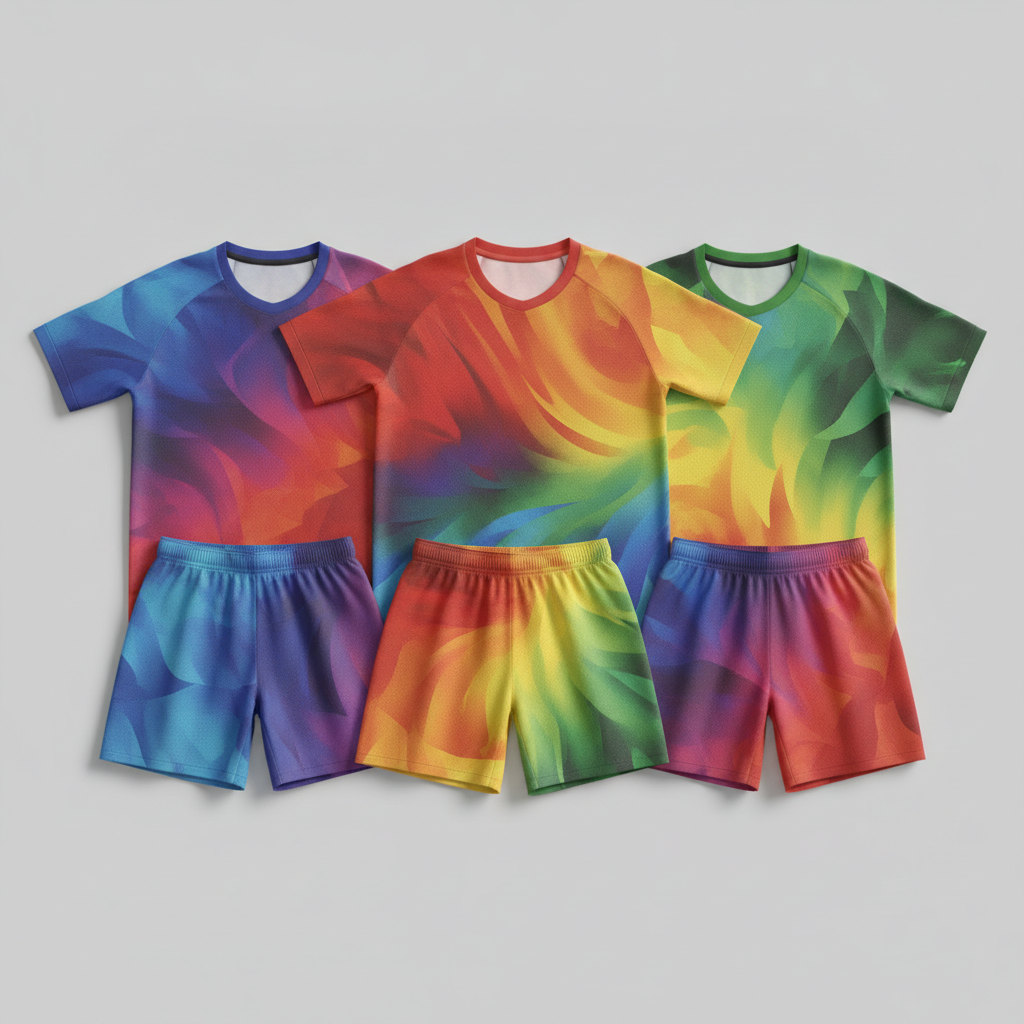
Sublimation has no such constraint. You design it once. The printer handles all the color separation behind the scenes. A gradient? No problem. A photorealistic image of a team mascot? Done. A design with 50 different color transitions? Same price as a two-color design. This is why many teams now use full-color photographic sleeves, chest patches, or detailed shoulder graphics that would be prohibitively expensive to screen print.
For teams wanting unique, highly customized jerseys that stand out, sublimation is the clear path. For teams with simple, classic two-color logos (think vintage font plus a shield), screen printing is still straightforward and cost-effective.
What are the cost differences between sublimated and screen printed jerseys?
Sublimated jerseys cost slightly more per unit upfront but deliver better durability; screen printed jerseys are cheaper initially but require replacement after one to two seasons. Long-term cost favors sublimation.
Let's break this down with actual numbers. A custom sublimated jersey set (jersey, shorts, and socks) runs roughly $28 to $34 per set in bulk orders of 20 to 50 units. A screen printed set of similar quality might be $24 to $30 per set. That difference looks small on the surface: maybe $50 to $200 more for a 25-player roster.
But here's the catch. If that screen printed design fades or cracks mid-season, you're either living with it or reordering. A partial reorder of 10 to 15 replacement jerseys, plus reprinting the graphics, easily costs $200 to $350. Now your "cheap" option has cost you more than buying sublimated jerseys to begin with.
See the exact cost for your team.
Get a free quote with no minimums and unlimited design revisions included.
Over three seasons, a team wearing sublimated uniforms spends less and has better-looking jerseys the entire time. That's not theoretical; it's measurable.
Which sports benefit most from sublimation?
High-contact sports like basketball, soccer, and wrestling gain the most from sublimation's durability; low-intensity recreational leagues can use either method depending on budget.

Basketball players slide on courts, compress their chests on contact, and wash uniforms frequently. Screen printed graphics take a beating. Sublimated jerseys shrug off the same treatment for years.
Soccer teams face sun exposure and repeated washing. Sublimation resists UV fading far better than screen printing. Football uniforms are similarly demanding: the padding, the movement, the sweat load. Cheerleading uniforms go through many washes and need to look sharp for competitions; sublimation delivers that.
For recreational league play that happens once a week with light practice, either method works. The uniform isn't stressed as much. But for competitive club teams, travel leagues, or school athletics where the same jersey is worn 50+ times per year, sublimation makes financial and aesthetic sense.
How do you choose the right printing method for your team?
Choose sublimation for multi-year competitive uniforms and design complexity; choose screen printing if budget is extremely tight and jerseys rotate frequently.
Ask yourself three questions. First: will these jerseys be worn heavily and repeatedly for multiple years, or are they one-season items? If they're multi-year, sublimation's durability saves money. If they're one-off or replacement rates are already built into the budget, screen printing is viable.
Second: what design do you want? If it's a simple two-color logo on a solid jersey, screen printing is straightforward. If you want photographic detail, complex gradients, or a full-color chest design, sublimation is the only practical option without a huge cost premium.
Third: what's your actual budget constraint? Sublimated jerseys cost maybe $4 to $8 more per set than screen printed. That's $100 to $200 for a typical roster. If that's a dealbreaker, screen printing gets you outfitted. If you can absorb that cost, sublimation pays for itself within the first season of heavy use.
We switched to sublimated uniforms and didn't replace a single graphic for three seasons. That paid for the upgrade twice over.
K2 Team Outfitting

What about moisture-wicking and fabric quality with each method?
Both sublimation and screen printing work on quality moisture-wicking polyester; sublimation doesn't add weight or restrict breathability.
The fabric itself is independent of the printing method. You can have a high-quality 4-way-stretch moisture-wicking jersey that's either sublimated or screen printed. The difference is in what happens to the surface after printing.
Screen printing deposits a layer of ink on the fabric. On the front and back panels, it's usually fine. But on stretchy sidepanels or underarms, that ink layer can feel stiff or restrict movement slightly. Athletes notice it in some cases.
Sublimation, by contrast, doesn't add any layer. The dye infuses into the fibers, so the fabric feels identical before and after printing. Stretch is unaffected. Breathability is unaffected. The jersey moves and wicks moisture exactly as designed.
Key Takeaways
- Sublimation bonds dye to fiber permanently; screen printing sits as a surface layer that cracks and fades.
- Sublimated jerseys cost $4 to $8 more per set but eliminate mid-season replacement needs and reprint costs.
- Sublimation supports unlimited colors and complex designs; screen printing requires separate screens for each color.
- Competitive, multi-year teams gain the most from sublimation; casual single-season leagues can use either method.
Get your team outfitted with the right printing method.
The choice between sublimated and screen printed jerseys comes down to durability, design, budget, and how long you'll wear them. For most competitive teams, sublimation is the better long-term investment. The jerseys look sharper, feel better, last longer, and cost less over multiple seasons.
K2 Sportswear prints all custom team jerseys using full-dye sublimation, which means no cracking, no peeling, no fading. You get unlimited colors, free design mockups, and reinforced double-stitched seams on every set. No minimum order required.
Ready to outfit your team?
Get a free quote and 24-hour design mockup with no commitment.